
Kimi K3
Agentic-class- Open-weight
- To be self-hosted on our own GPU infrastructure
- Published prices
Planned · production inference


Navid · Industrial AI CloudUnder development · Dammam
Navid is building a 15 MW AI Factory in Dammam that will turn Saudi energy into intelligence for the Kingdom, the GCC and customers worldwide. Phase one is under construction; capacity is being allocated ahead of it.
Inside the hall, as designedNVIDIA DGX B300 Reference ArchitectureSelect a marker for specifications
Scroll to enter
Every industrial economy now runs on two inputs: energy and intelligence. Saudi Arabia has the first in abundance. Navid is building the machine that will convert it into the second — anchored in the Kingdom, engineered to serve the region and the world.
That machine is an AI Factory. We are building it in Dammam, and we will open it to everyone who needs what it makes.
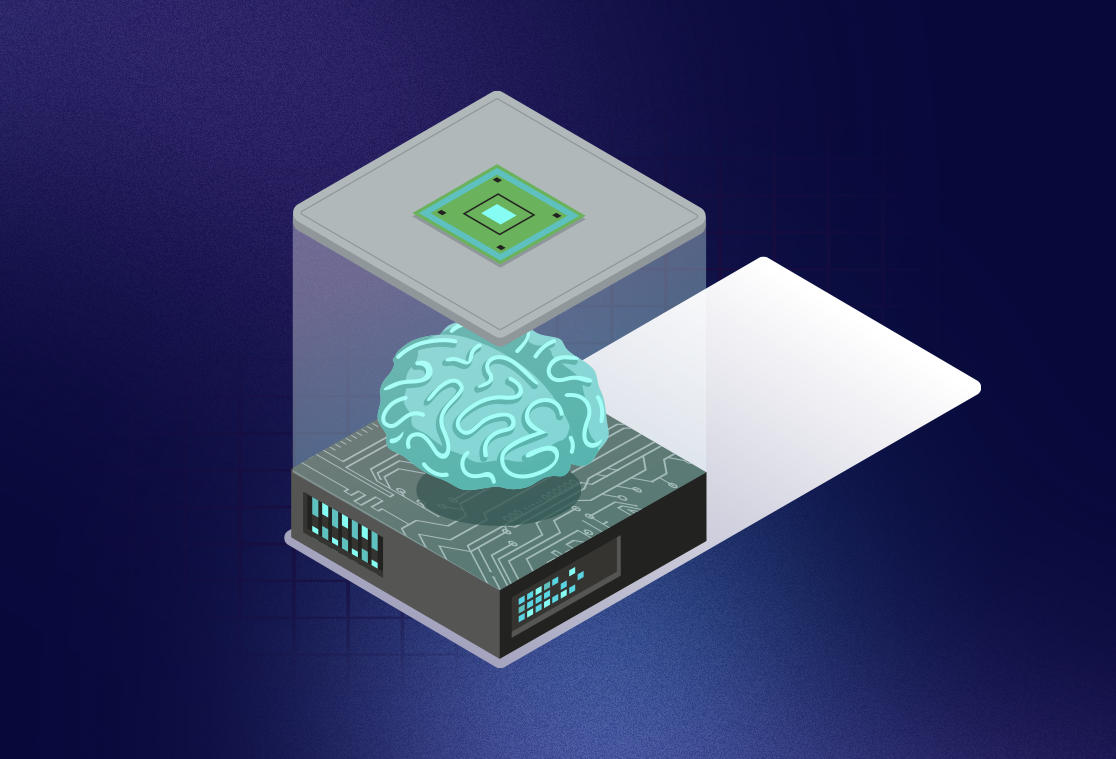
15 MW across 6,000 m² of industrial land in MODON's Dammam 2nd Industrial City. Liquid-cooled from day one, engineered in partnership with ProteCooling — Mulhim & Partners Engineering Company.
Power train, cooling loop and rack density are designed as one system around the accelerators they carry. That is what will let frontier silicon run at its ceiling, every hour of the year.
NVIDIA DGX B300 Reference Architecture · NEO Cloud AI Factory · NVIDIA Preferred Partner
| IT Load Capacity | 12.5 MW |
|---|---|
| Total Facility Power | 15 MW | 2.5 MW Cooling & Overhead |
| Power Infrastructure | 33kV Dual Feed | N+1 Redundancy |
| Cooling System | Direct Liquid Cooling (DLC), NVIDIA Reference Design |
| PUE Target | ≤ 1.20 |
| Rack Density | 120 kW per Rack (GB300 NVL72) | 200 kW per Rack (Vera Rubin NVL144) |
| Total POD Capacity | ≈104 × GB300 NVL72 = 7,488 Blackwell Ultra GPUs at 12.5 MW |
| Network | NVIDIA Quantum-2 InfiniBand |
| Storage | High Performance Parallel File System |
| Security | Physical + Cybersecurity by Design |
Design specifications for phase one, currently under construction.
Every watt the accelerators draw leaves the building as heat. This is the path it is designed to take: captured at the die, handed across at the CDU, rejected to Dammam's ambient air — and back again, without evaporating water.
Captured at the source
Direct liquid cooling cold plates sit on the GPUs and CPUs, taking the full 12.5 MW IT load as heat before it ever reaches the air.
Hot coolant to the CDUs
Warm coolant leaves the racks at roughly 45 °C and runs to the Coolant Distribution Units.
Pumps · filtration · flow control
The exchanger isolates the rack loop from the facility loop, so nothing that circulates through a GPU ever touches building water.
Facility water out, and back
On the facility side, warm water carries the load out to heat rejection — and returns cool to the exchanger.
Dry coolers to ambient air
Dry coolers dissipate the full thermal load to ambient air, optimised for the Dammam desert climate. Dry, not evaporative.
The loop closes. Cool facility water returns to the exchanger, and coolant goes back to the racks at roughly 35 °C. Nothing is drawn in and nothing is thrown away.
Running the loop is what the other 2.5 MW buys. It is spent across four places:
The budget also covers a 5% air-cooled ancillary load.
| Platform | Per rack | Deployable at 12.5 MW IT load |
|---|---|---|
| NVIDIA GB300 NVL72 | 72 Blackwell Ultra GPUs and 36 Grace CPUs, at 120 kW per rack. | ≈104 racks — 7,488 Blackwell Ultra GPUs. Rack-scale and NVLink-connected: designed for domain-adaptive training and high-throughput inference for the largest open-weight models. |
| NVIDIA Vera Rubin NVL144 | 144 Rubin GPUs and 36 Vera CPUs, at 200 kW per rack. | ≈62 racks — 8,928 Rubin GPUs. NVIDIA's next generation, from 2026 — the future-ready path as the facility scales. |
Node specification — NVIDIA HGX B300. Eight B300 SXM GPUs, 288 GB HBM3e per GPU, 2.3 TB HBM3e per system, 5th-Gen NVLink.
Heterogeneous by design. When capacity comes online, every workload lands on the silicon built for it — and you pay for exactly that.
A facility is only as honest as its arithmetic. Here is where the power is budgeted, and what it is allowed to carry.
15 MW
The IT load is a budget, not a rack count. Spend it at 120 kW a rack or at 200 kW a rack and you get two different floors.
~104 racks → 7,488 GPUs Deployable capacity at 12.5 MW IT load: roughly 104 GB300 NVL72 racks, or 7,488 Blackwell Ultra GPUs.
~62 racks → 8,928 GPUs The same power budget spent denser: roughly 62 Vera Rubin NVL144 racks, or 8,928 Rubin GPUs.
Prefill is compute-bound. Decode is memory-bound. We will run them on separate GPU pools, each scaled to its own curve, so every request meets hardware matched to the work it is doing.
NVIDIA reports that disaggregated serving can raise throughput by up to 15× without sacrificing latency. We designed the floor for it from the first rack.
It arrives as the one number that decides economics at scale: tokens per megawatt. That is what will let us serve frontier models at the labs' published rates while owning the metal underneath.
Reads the whole prompt at once. Scaled on the compute curve.
Emits one token at a time. Scaled on the memory curve.
The floor is being built to self-host open-weight frontier models on our own GPU infrastructure and serve them as production inference — including agentic-class models such as Kimi K3 and GLM-5.2.
Navid serves models today on the Yehia playground. Dammam is what moves that onto our own metal, at industrial scale.
Frontier models, published prices, sovereign ground — when phase one comes online it will open to teams in the Kingdom, across the GCC and internationally, on infrastructure you are entitled to inspect.
Fourteen centuries of written heritage, carried forward into models that reason natively in the language.
Our deepest investment is Arabic-native AI. The factory is the sovereign compute layer being built for training, adapting and serving Arabic models in agentic use across government, industry and enterprise. The Kingdom leads the region in Arabic model development. We are building the factory floor beneath it.
نماذج تُفكّر بالعربية
Models that think in Arabic.Fourteen centuriesCarried forward
Anchored in Saudi Arabia and built to the Kingdom's regulatory standard — the strictest bar our customers ask us to clear.
Your prompts, documents and model weights will stay where you place them, with in-Kingdom residency for workloads that require it.
Multi-tenant NeoCloud with tenant-level separation — or dedicated capacity where regulation requires it.
PUE target ≤ 1.20
Reduced Water Usage
Designed for Clean Energy Integration
Supporting KSA Vision 2030
Capacity will be open wherever the demand is: national entities and industrial operators in the Kingdom, enterprises across the GCC, and international teams that need frontier inference close to their users.
Dammam sits between Europe, Africa and Asia — one of the shortest network paths to a large share of the world's inference demand, on a grid with the power to feed it.
It is being built for the operators of refineries, ports, utilities, factories and national platforms — where a model is a control loop with consequences.
The site, the cooling architecture and the fabric are designed to scale well beyond it. Phase one is under construction, demand is already arriving from the Kingdom, the GCC and abroad, and early capacity is being allocated now.
Empower your organization with Navid's AI-driven solutions, merging human expertise with advanced technology for unparalleled growth and security.

Copyright © 2026 Navid.